Remembrance Sunday
This Sunday is Remembrance Sunday in the UK. It takes place on the second Sunday in November (the Sunday nearest to 11 November, Armistice Day, the anniversary of the end of hostilities in World War I in 1918).
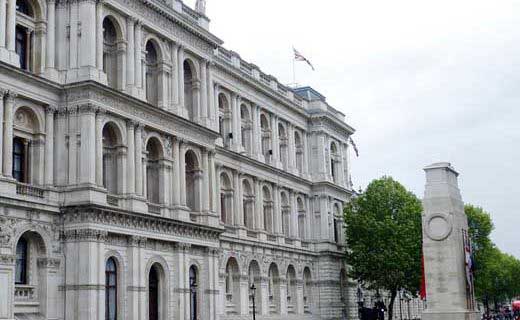
The Cenotaph on Whitewall in central London is the most important venue. The ruling monarch, members of the Royal Family, the Prime Minister, and leaders of the other main political parties all attend this solemn occasion. The dignitaries lay wreaths and a lone bugler sounds the Last Post. However, smaller Remembrance Sunday events also take place at war memorials across the country.
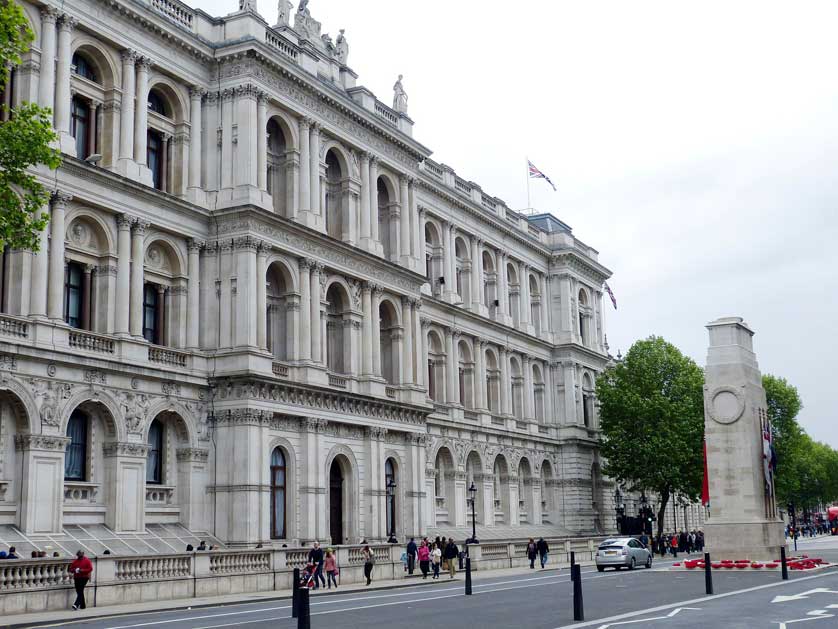
The Cenotaph in Whitehall, central London
History of Remembrance Day and the Cenotaph
Remembrance Sunday is a solemn occasion observed in the UK on the second Sunday of November to honor the sacrifices of British and Commonwealth military and civilian servicemen and women in the two World Wars and later conflicts. It is a day to reflect on the immense cost of war and to pay tribute to those who have given their lives in the service of their country.
The event has its roots in Armistice Day, which was commemorated for the first time in Great Britain on November 11, 1919, to mark the one-year anniversary of the armistice that ended World War I. In response to a suggestion made by a politician, King George V requested that the nation pause in silence for two minutes to acknowledge the war’s fatalities.
Over time, Armistice Day evolved into Remembrance Sunday, which encompasses the commemoration of all British and Commonwealth military personnel who have lost their lives in wars and conflicts since the outbreak of World War I. The date was changed to the second Sunday of November to avoid clashing with Armistice Day itself, which is observed on November 11th.
The Cenotaph memorial honours Britain’s war dead from the two world wars of the 20th century. Made from Portland stone, it was designed by Sir Edwin Lutyens and erected in 1920.
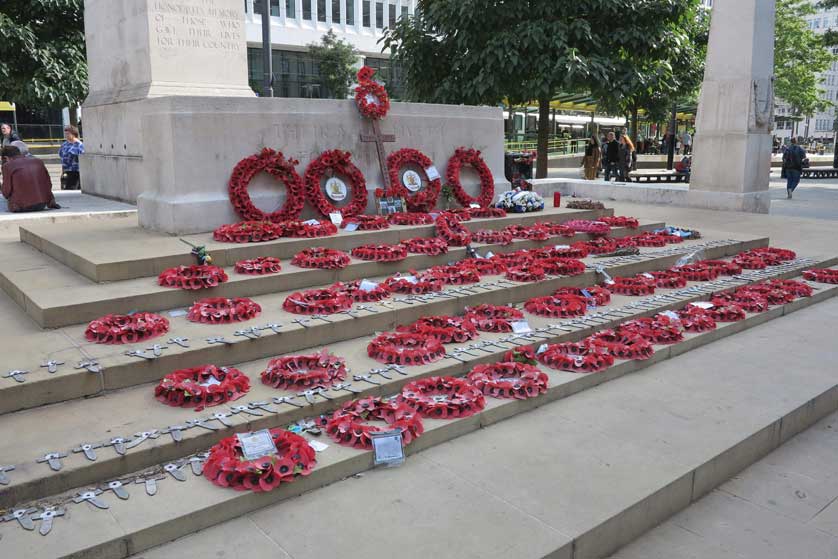
Wreaths of poppies at the War Memorial in Manchester
Edwin Lutyens
Edwin Lutyens is famous for his work in New Dehli, India, and also designed Castle Drogo and Lindisfarne Castle on Lindisfarne Island in Northumberland. His design for the Cenotaph has been copied in several former British territories including Bermuda, Hong Kong, and New Zealand.
The monument is austere with little decoration except for the sculptured laurel wreaths on the sides. It is inscribed with the words: THE GLORIOUS DEAD.
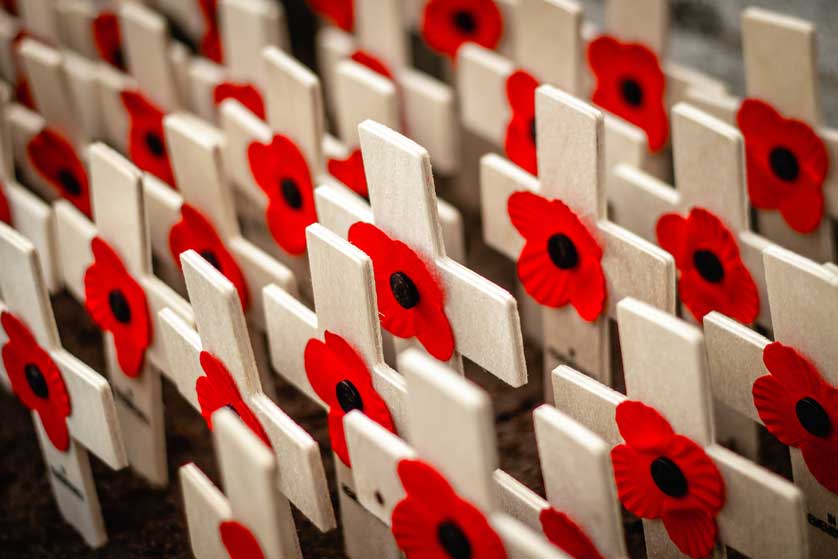
Poppies were a common sight on the Western Front. They flourished in the soil turned to mud by the shelling
Observing Remembrance Sunday
The day is marked by a variety of ceremonies and observances throughout the UK. The centerpiece of the commemorations is the National Service of Remembrance, held at the Cenotaph war memorial in Whitehall, London. The service is attended by senior members of the Royal Family, the Prime Minister, government officials, military personnel, veterans, and also members of the public.
At 11:00 AM on Remembrance Sunday, a two-minute silence is observed across the nation. This silence is a poignant moment of reflection, honoring the fallen and acknowledging the sacrifices made by those who have served in the armed forces.
Other Remembrance Sunday observances include wreath-laying ceremonies at war memorials, church services, and community gatherings. Many people also wear poppies. These are a symbol of remembrance, as a way to show their respect and support for veterans and their families.
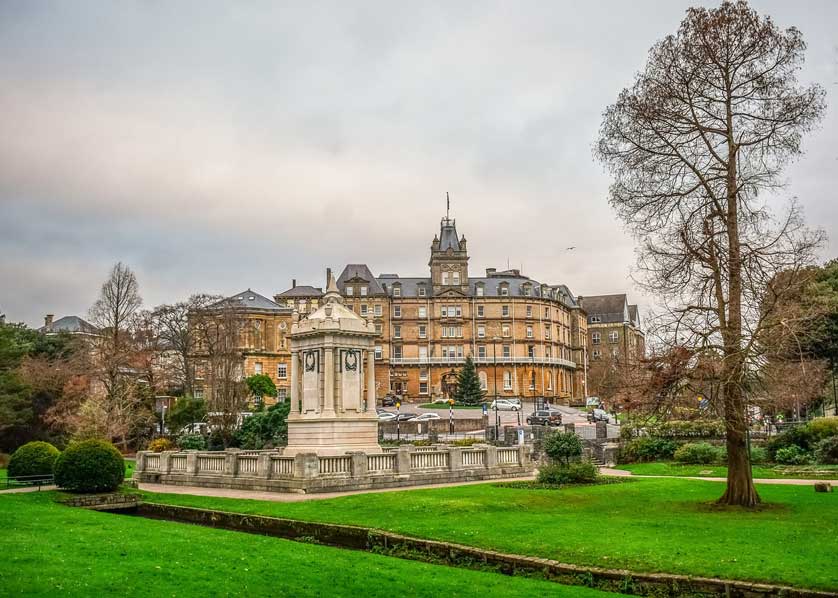
A war memorial in Bournemouth
Significance of Remembrance Sunday
The day also serves as a reminder of the human cost of war as well as the importance of peace. It is an opportunity to honor the sacrifices of those who have served in the armed forces. In addition, the events reaffirm the nation’s commitment to upholding freedom and democracy.
As well as its historical significance, Remembrance Sunday also plays a vital role in contemporary society. It fosters a sense of national unity and collective remembrance. Thus reminding people of the shared values and sacrifices that have shaped the nation’s identity. By paying tribute to the fallen, Remembrance Sunday encourages a commitment to peace and understanding in a world often marred by conflict.

The design incorporates a representation of a coffin at the top
Access – Getting There
The memorial is on Whitehall just opposite Downing Street, close to the Montgomery Statue, the George Duke of Cambridge Statue outside the Old War Office, and also the Women of World War II Monument.
Westminster on the Circle, District, and Jubilee lines is the nearest tube station. St James’s Park tube station is also very close by, just a 5-minute walk away.
London buses that run along Whitehall include the numbers 11, 12, 24, 87, 88, 159, and also the 453. In addition, the following London night buses stop on Whitehall, the N11, N44, N87, and N109.

The unveiling ceremony on 11 November 1920
Nearby
Within easy walking distance of the Cenotaph are several, famous London sights. Among them are Admiralty Arch, Big Ben, the National Gallery, the Churchill War Rooms, the Houses of Parliament, as well as the London Eye. Horse Guards’ Parade is also on Whitehall. The Red Lion on nearby Parliament Street is a popular London pub in this part of the capital.
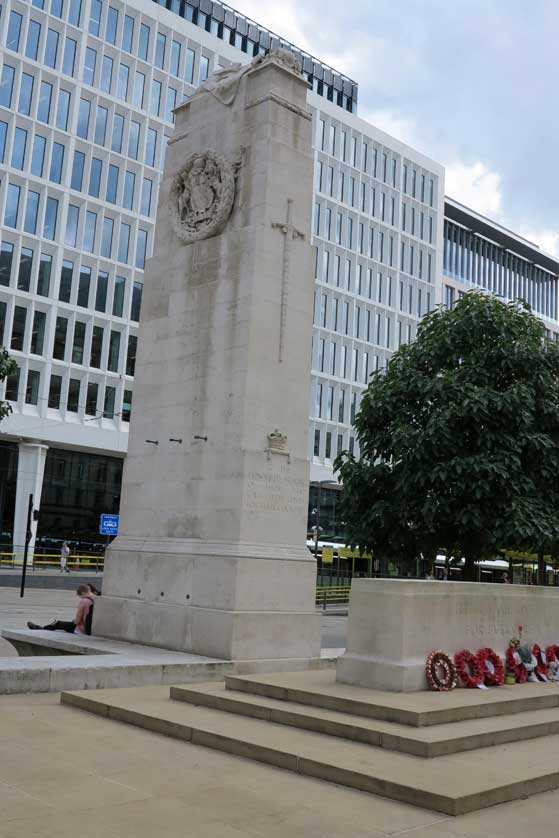
Manchester Cenotaph in St Peter’s Square
Book a Hotel in London - from 5 stars to budget options
Windsor Castle, Bath and Stonehenge Tours with Stonehenge Tickets from London
Westminster Abbey Tickets & Tours
Tickets For London Attractions - Tiqets.com
© BritainAllOver.com – Guide to the Best of Britain