
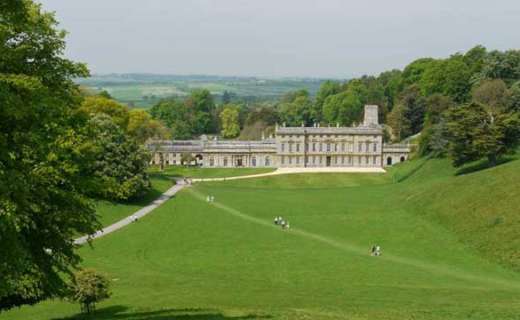
Dyrham Park, Gloucestershire, England
Dyrham Park was designed and built in two stages. The first stage (1692) was designed by Samuel Hauduroy and the second stage (1704) by the well-known architect William Talman.
The house at Dyrham Park has been featured in films such as 1993’s Remains of the Day as well as in several TV series including Dr. Who and Poldark.
History
The house was built by William Blathwayt who was King William III’s Secretary of War. His passion for all things Dutch can be seen in the paintings and furniture on view in the house.
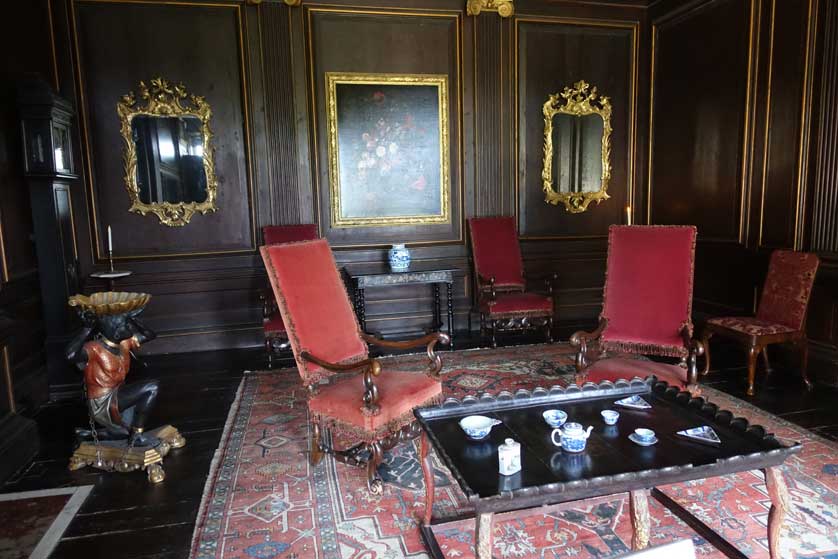
One of a pair of slave stands at the house
Previously he was secretary of the Privy Council’s committee on trade and foreign plantations and was active in the promotion of the slave trade in North America and the Caribbean.
A pair of slave stands showing chained female slaves in subservient poses are on display with written documentation explaining the historical context and Blathwayt’s connections with slavery.
For example, he served as Auditor General of the Plantation Revenues for Barbados, Jamaica, and Virginia.
Today, Dyrham is managed by the National Trust.

The house at Dyrham, Gloucestershire
Interior
The interior has many magnificent wood-paneled rooms. Information is available on the founder William Blathwayt and his collection of paintings and ceramics.
The collection is particularly big on Dutch painting and pottery, in particular Delft faience. Blathwayt had begun his diplomatic career in The Hague.
He went on to have a successful career as a diplomat and later MP. He is also credited with establishing the War Office as part of the British government. He was also later an administrator of the British colonies in North America. For a man of fairly humble beginnings, he had an amazing rise to the top.
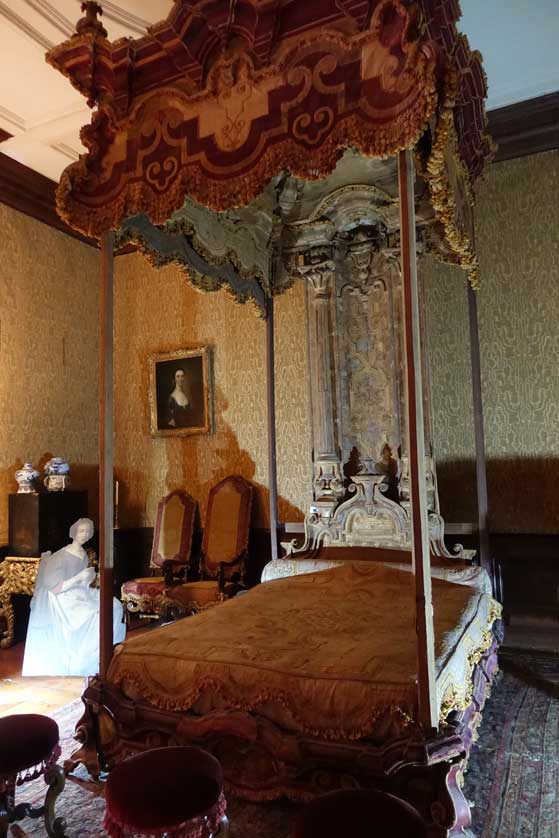
The state bed made in Anglo-Dutch style around 1704
Gardens
The property at Dyrham features 110 hectares of garden and rolling parkland in the Gloucestershire countryside. The grounds feature artificial lakes, statuary, and cascades. The gardens were designed by George London (1640-1714) in the late 17th and early 18th centuries.

The house and vast grounds at Dyrham
Visitors to Dyrham are likely to encounter over 200 fallow deer which wander freely throughout the park.
*Note – the entire herd was culled in March 2021 due to an outbreak of bovine tuberculosis (bTB). However, the National Trust plans to reintroduce the deer as soon as possible.

Deer in the park
The entrance to Dyrham Park is a short drive from Bath on the A46. The house is open to visitors from 11 am-5 pm from 13 March to 31 October in 2010 and the park from 11 am – 5:30 pm throughout the year.
Nearby
Visitors to Dyrham Park should also visit nearby Prior Park Landscape Garden, Lacock Abbey, and Tyntesfield.
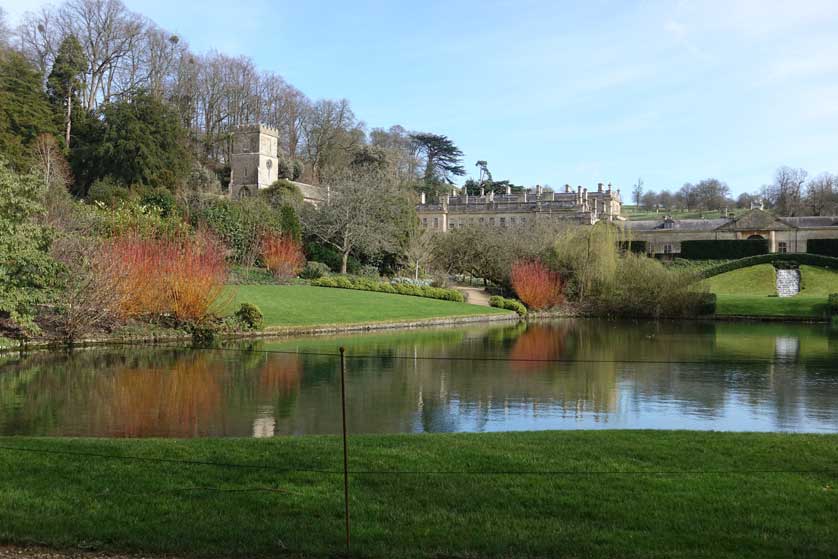
The extensive grounds and lake with St Peter’s Church on the left
Access – Getting There
Dyrham Park
Dyrham, near Bath
Gloucestershire
SN14 8ER
Tel: 0117 9372501
Map of Bath the south west of England and Dyrham
Gallery
See a collection of images of the house and gardens.

The kitchen
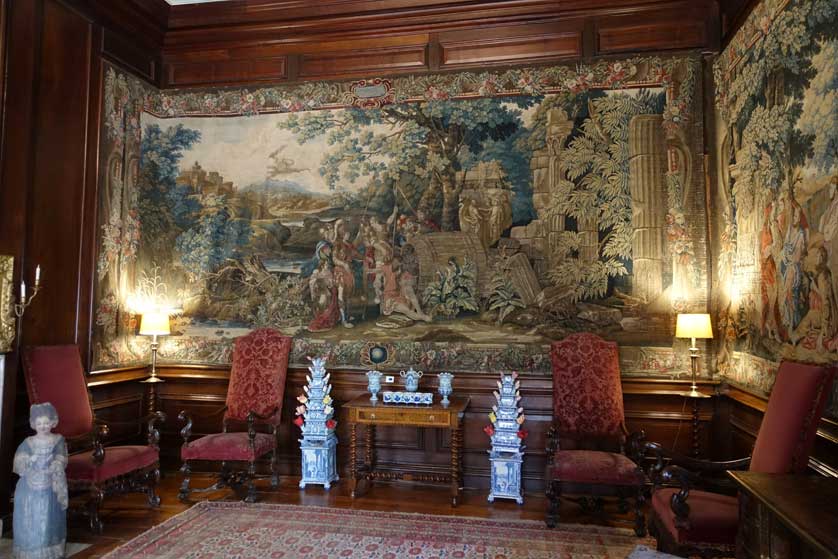
Chinese-style pyramid vases made in Delft and a large tapestry decorate the Diogenes Room

A view of the house

The grounds contain several water features

The National Trust now owns the property
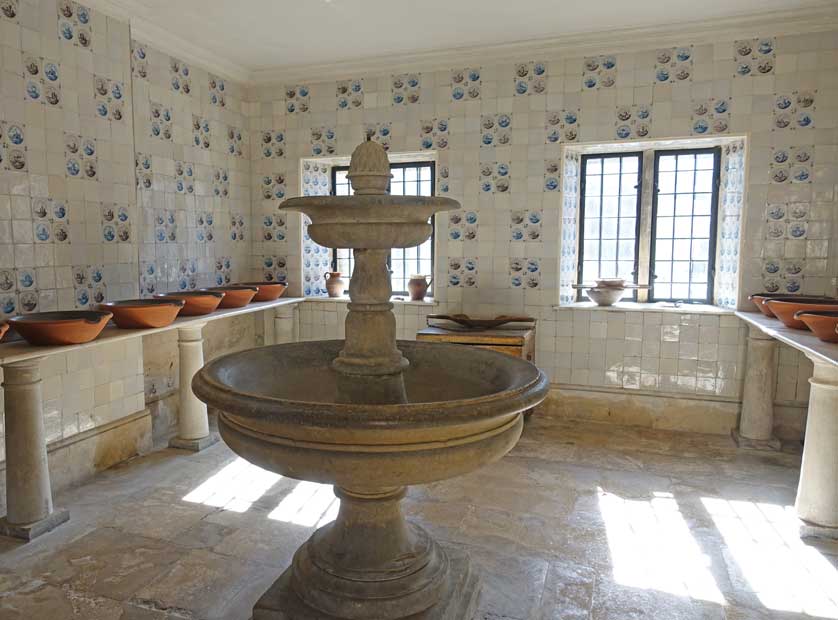
The pantry with ornamental water basin

Food laid out in the kitchen
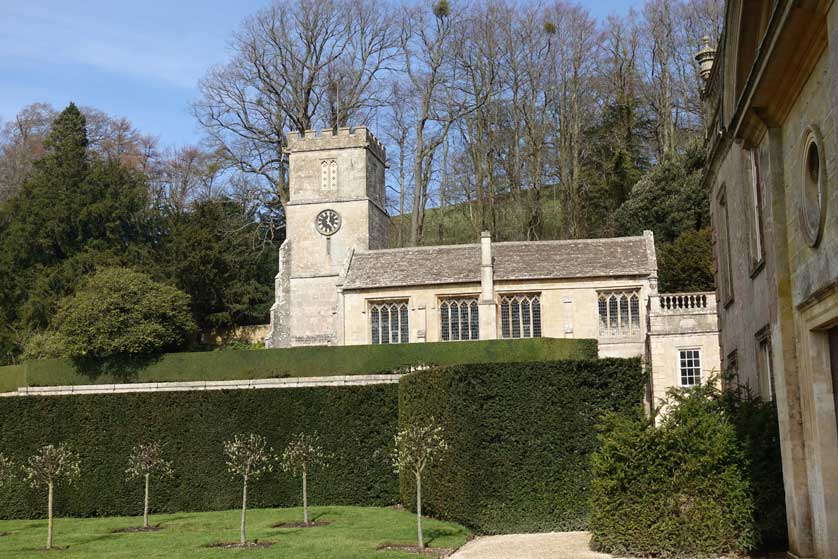
St Peter’s Church dates originally from the 13th century but was restored when the main house was built
Book a Hotel in London - from 5 stars to budget options
Windsor Castle, Bath and Stonehenge Tours with Stonehenge Tickets from London
Westminster Abbey Tickets & Tours
Tickets For London Attractions - Tiqets.com
© BritainAllOver.com – Guide to the Best of Britain
