
Mellor Mill, Marple
Mellor Mill (Oldknow’s Mill) in Marple, near Stockport was once the largest mill building in the world. It burnt down in 1892. Both the mill and the nearby lime kilns were built by businessman Samuel Oldknow.

The mill in its prime
History
Mellor Mill, also referred to as Bottom’s Mill, was a prominent six-story cotton mill located in Marple, Greater Manchester. Constructed in 1793 by Samuel Oldknow, the mill measured 42 feet (13 meters) in width and 210 feet (64 meters) in length, with additional three-story wings extending the total length to 400 feet (120 meters). Designed primarily for spinning coarse yarn, the mill was initially powered by the Wellington water wheel.

All that remains of the mill are now ruins
Significant modifications were made to the local landscape to facilitate its operation. The course of the River Goyt, which also served as the boundary between Derbyshire and Cheshire at the time, was altered, and a weir was constructed. Water from the weir fed into a millpond that later became known as the Roman Lakes, which, in turn, supplied water to a second millpond along with reserves from a reservoir in Linnet Clough. An auxiliary source of power was provided by an external water wheel, known as the Waterloo wheel.
At its peak in 1804, Mellor Mill employed approximately 550 workers and operated 10,080 spindles. However, the mill was destroyed by fire in 1892, marking the end of its industrial operations.
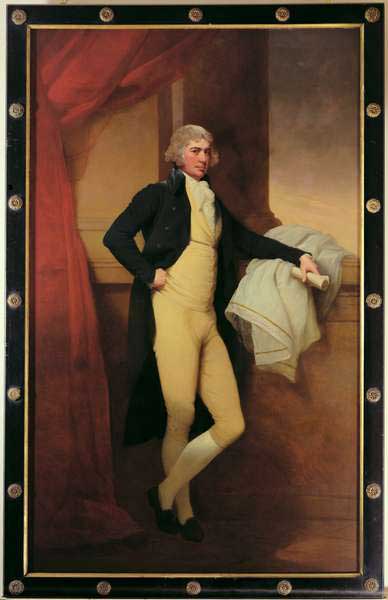
Entrepreneur and industralist, Samuel Oldknow
Samuel Oldknow
Samuel Oldknow Jr. (1756-1828) was a prominent figure in the early British textile industry and is widely recognized as a pioneering cotton mill owner, entrepreneur and industrialist. Born in Anderton, near Chorley in Lancashire, Oldknow played a key role in the development of mechanized cotton spinning during the Industrial Revolution. Oldknow got his start with a loan and joined the cotton boom in nearby Stockport in 1784.

The site of the former mill
His business ventures extended beyond textile production. Oldknow also engaged in farming, coal mining, the manufacture of lime as well as the development of canal infrastructure. For example, he was a major investor in the local Peak Forest Canal.

Information board at the site
Despite his entrepreneurial success, Oldknow faced financial difficulties later in life, culminating in significant debt and reliance on financial support from business associates like Sir Richard Arkwright. Following his death, Mellor Mill passed to the Arkwrights. He is buried at the nearby Church of All Saints in Marple.

The ruins of Mellor Mill in Marple, Stockport
Access – Getting There
Marple is within easy reach of both Manchester and Stockport by car.
There are also several buses connections from Stockport Interchange bus station near Stockport Station to Marple. Buses 358, 383 and 384 are all convenient. The bus is quicker and more convenient than the train.
If you are arriving by train, however, the nearest railway stations are Marple and Rose Hill. Marple, on the Hope Valley Line, has trains from Manchester Piccadilly and New Mills Central. Rose Hill is a branch of the Hope Valley Line to Sheffield and connections are infrequent.

The 358 Bus from Stockport Interchange
Nearby
A visit to the ruins can be combined with side trips to the canal at Marple Junction and the fun, family-friendly The Garden House. The original Garden House building, also now in ruins, was part of Oldknow’s industrial estate. First constructed by Samuel Oldknow in 1801, it served as a small arable farm dedicated to producing food for the workers of Mellor Mill. The site is now a charity helping children with special needs. Also nearby is the Roman Lakes wedding and events venue.

Alpacas at The Garden House
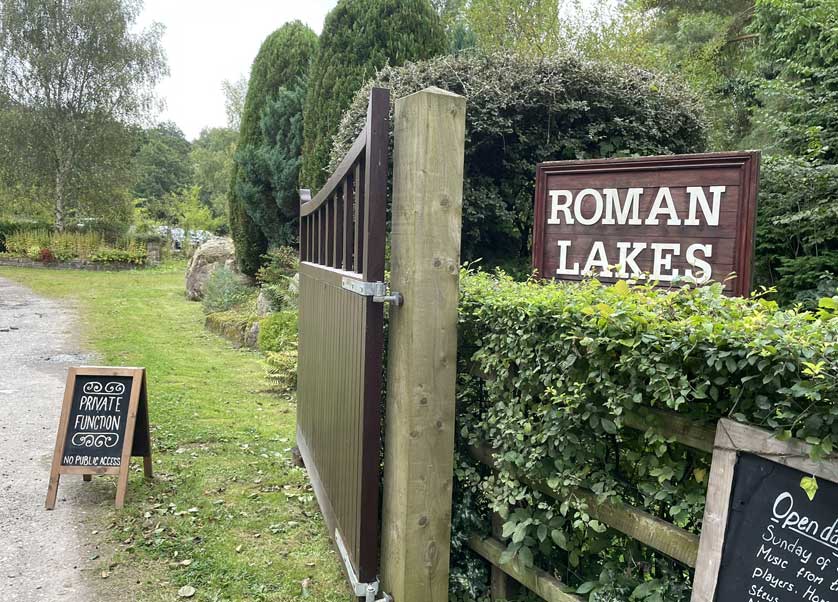
Roman Lakes
Book a Hotel in London - from 5 stars to budget options
Windsor Castle, Bath and Stonehenge Tours with Stonehenge Tickets from London
Westminster Abbey Tickets & Tours
Tickets For London Attractions - Tiqets.com
© BritainAllOver.com – Guide to the Best of Britain