Statue of Sir Robert Clive, Whitehall, London
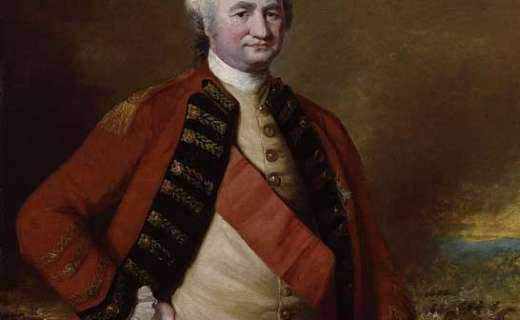
A statue of Robert Clive or “Clive of India” stands in King Charles Street off Whitehall near the Cabinet War Rooms in London.
Clive (1725-1774) is credited with establishing British rule in India for the East India Company (EIC) through his campaigns against the French and Indian native rulers.
Life
Born at Styche near Market Drayton in Shropshire, Clive was a teenage tearaway and ruffian. Sent to India by his despairing father in the 1740s to work as a clerk in Madras (Chennai), Clive tried twice to take his own life with a pistol.
Though he had received no formal military training, Clive distinguished himself in various sieges and skirmishes with French forces commanded by General Joseph François Dupleix, as the two countries’ conflict in Europe spread to their trading stations in India.

Statue of Clive in Whitehall, London
Clive the Legend
After 10 years of service for the East India Company, Clive returned to England but was soon back on the sub-continent, where he was to make himself a legend and an incredibly rich man.
Retaking Calcutta, which had been attacked by the Nawab of Bengal, Clive was to defeat his adversary at the Battle of Plassey in 1757, after the desertion of a number of the Nawab’s supporters, following secret negotiations with the wily Clive.
Clive’s third and final spell in India from 1765-1767 saw him campaigning again against the Mughal Emperor of Delhi and his allies. A victory at the Battle of Buxar saw Clive receive the lands of Bengal from the Shah and thus formally establish the British presence in India.
Death
Clive committed suicide with a pen-knife in Berkeley Square in London in 1774. A manic depressive throughout his life and wracked by a painful illness, which he attempted to treat with opium, Clive’s death at only 49, came at a time of personal attacks on him in the Houses of Parliament, sparked by jealousy of his huge wealth. Though buried in an unmarked grave in Shropshire, Clive remains as one of the great English adventurers.
Legacy
His legacy in India, however, was to prove both immense and controversial. The left-leaning Guardian has labelled him a “vicious asset stripper,” on his return to England from the sub-continent he was known as “Lord Vulture” and his contemporary Samuel Johnson wrote of his death that he “had acquired his fortune by such crimes that his consciousness of them impelled him to cut his own throat.”
The bronze statue is the work of the Scottish sculptor John Tweed (1869-1933) and was unveiled in 1912.
Following the global anti-racism protests of 2020, Clive’s statue will be considered in a review of London’s public monuments ordered by the Mayor of London, Sadiq Khan.
There is also a bronze statue of Clive in Shrewsbury, which was erected in 1860. The statue stands in The Square, off Shrewsbury High Street. Clive was MP for Shrewsbury from 1761 until his death and Mayor of Shrewsbury from 1762 to 63.

Whitehall and the Statue of Sir Robert Clive
Nearby
Other attractions in London in the vicinity of Whitehall by tube or bus include St Paul’s Cathedral, Ye Olde Cheshire Cheese Pub on Fleet Street, nearby Westminster Abbey, and Big Ben or farther afield Buckingham Palace. South of the River Thames is Shakespeare’s Globe Theatre and the London Eye.

Statue of Clive in The Square, Shrewsbury
Statues in Britain
George Duke of Cambridge Statue
Wellington Statue & Traffic Cone
Women of World War II Monument
Read more on public statues in Britain
Book a Hotel in London - from 5 stars to budget options
Windsor Castle, Bath and Stonehenge Tours with Stonehenge Tickets from London
Westminster Abbey Tickets & Tours
Tickets For London Attractions - Tiqets.com
© BritainAllOver.com – Your Guide to the Best of Britain