

Lancaster Castle, Lancashire
Lancaster Castle in the county town of Lancaster in Lancashire is one of the most well-preserved and historically significant castles in the country. With a history spanning over a thousand years, it has played a crucial role in England’s judicial and penal system while also being linked to infamous trials such as the Lancashire Witch Trials of 1612. Today, it stands as a popular tourist attraction, offering guided tours that bring its fascinating past to life.
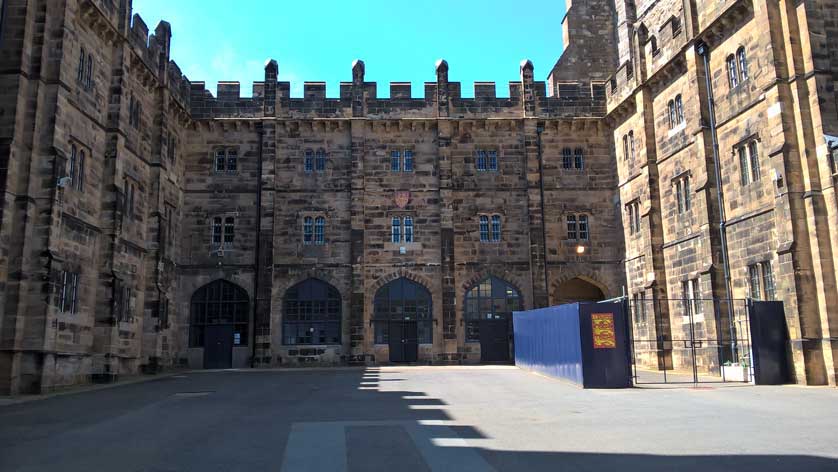
Courtyard of Lancaster Castle
History
The origins of Lancaster Castle date back to the Roman occupation of Britain, when a fort was established on the site. The first substantial medieval castle was built in the 11th century, following the Norman Conquest, under the orders of Roger de Poitou. Over the centuries, the castle was expanded and fortified, becoming a key stronghold in the defense of the English northwest against Scottish invasions.
During the late Middle Ages, Lancaster Castle became an important seat of justice. It served as both a court and a prison, witnessing numerous trials and executions. The most infamous of these were the 1612 Lancashire Witch Trials, in which ten people were found guilty of witchcraft and sentenced to death.
The castle continued to function as a prison well into the 20th century, with its use as a jail only ending in 2011. Since then, it has been opened to the public as a heritage site, offering an immersive experience of its long and dramatic past.
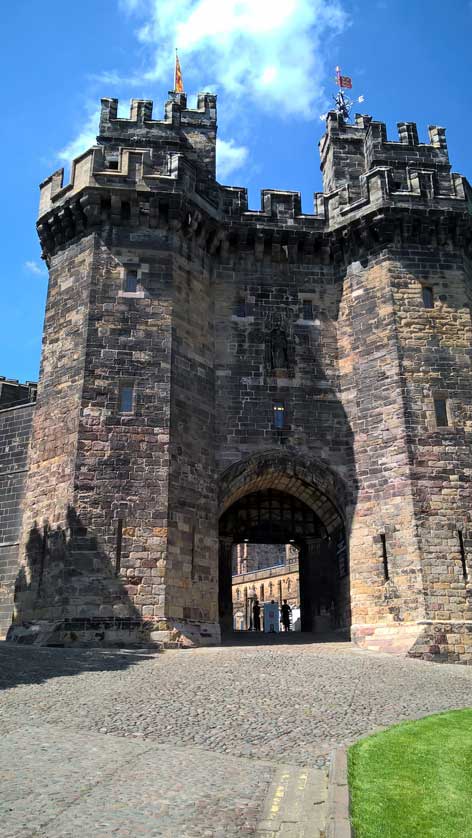
One of the entrance gates of the castle
Architecture
Lancaster Castle has a rich combination of Norman, medieval, and later architectural styles.
The Keep (or Lungess Tower) is one of the oldest surviving parts of the castle, dating most likely from the 12th century. It provided both defensive strength and living quarters for the castle’s rulers.
The Well Tower (or Witches’ Tower) is so named because of its association with the imprisonment of the Lancashire witches. It also housed other prisoners over the centuries.
The Gatehouse dates from the 14th century, the imposing twin-towered gateway is one of the most distinctive elements of the castle’s architecture and has served as the entrance to both the castle and its courtrooms.
The Shire Hall is a later addition and this Georgian structure houses a grand court where trials took place, including the famous witch trials. The Shire Hall’s interior features an impressive display of heraldic shields.
Finally, the Castle Walls and Towers encircle the castle and these fortifications provided defense and contained numerous prison cells and dungeons.
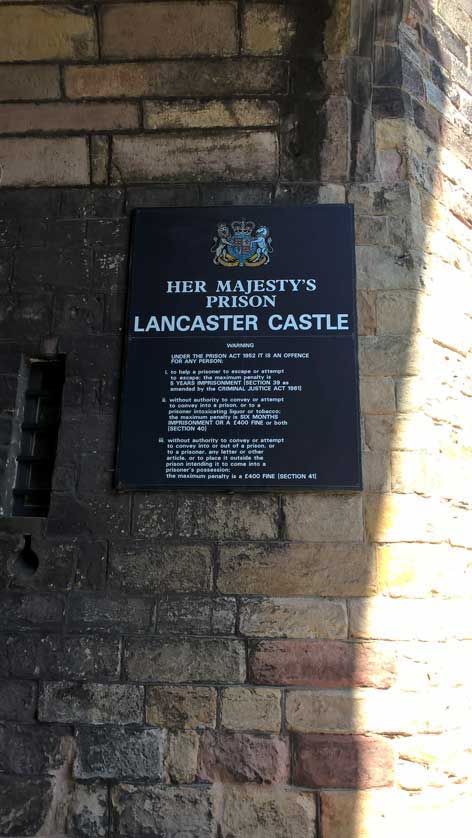
Entrance to the former prison
The Prison at Lancaster Castle
For centuries, Lancaster Castle functioned as one of England’s most notorious prisons. From the 12th century onwards, the castle held a wide variety of inmates, from petty criminals to political prisoners and debtors. Conditions were often harsh, with prisoners kept in damp, dark cells with little regard for their well-being.
One of the most infamous episodes in the castle’s history was its use for the trials and imprisonment of the Lancashire witches. However, the prison continued to operate long after the medieval period, serving as a debtors’ prison in the 18th century and a general jail in the 19th and 20th centuries.
The castle’s prison officially closed in 2011, making it one of the longest-operating prisons in England’s history. Today, visitors can explore some of the preserved prison areas, learning about the harsh realities of incarceration in centuries past.
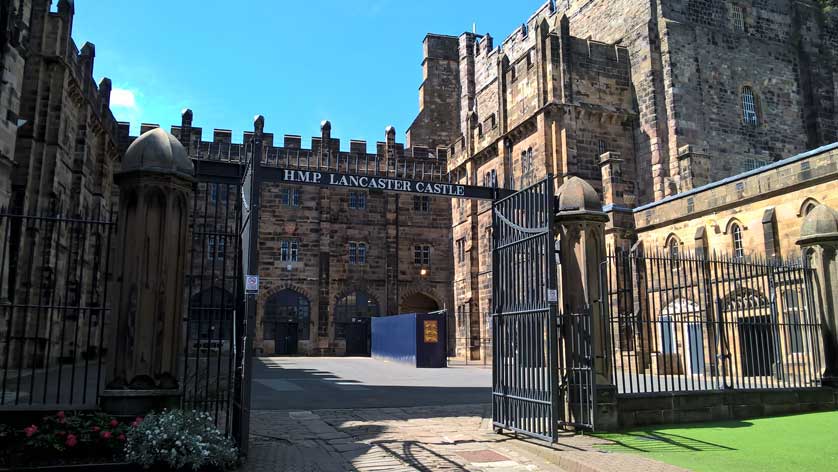
HMP Lancaster Castle
The Lancashire Witches and the 1612 Trials
The most notorious event associated with Lancaster Castle is the Lancashire Witch Trials of 1612. This infamous case saw twelve people from the Pendle Hill area accused of witchcraft and brought before the courts at the castle. The trials took place in the wake of King James I’s obsession with rooting out witches. All the accused were subjected to unfair legal proceedings.
Ten of the twelve were found guilty and hanged on the nearby moors. Their fates were largely sealed by the testimony of a nine-year-old girl, Jennet Device. Unfortunately, her accusations played a crucial role in the convictions. The Lancashire Witch Trials remain one of the most significant examples of witch hysteria in British history.
Today, Lancaster Castle commemorates this dark chapter with exhibits and storytelling tours. They explore the tragic events and their impact on society.
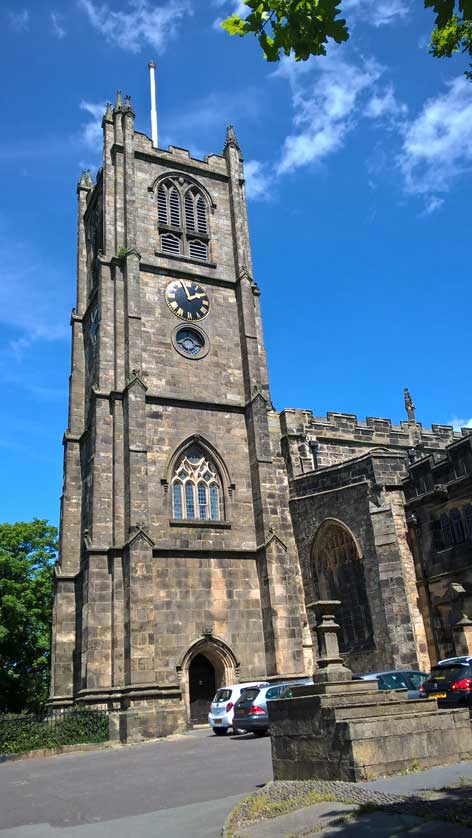
The church tower
Lancaster Priory (the Priory Church of St Mary)
Lancaster Priory, officially known as the Priory Church of St Mary, is a historic Anglican church near to the castle. Its roots dateg back to the 11th century. Built on the site of a former Roman fort, the priory has a rich history intertwined with the development of the city. The current structure, dates predominantly from the 14th and 15th centuries. The church has impressive Gothic architecture, including intricate stained-glass windows and an impressive carved wooden roof. The church’s rare and beautifully preserved medieval choir stalls, which feature misericords carved with intricate depictions of mythical creatures and biblical scenes are also of note. Today, Lancaster Priory remains an active place of worship hosting both concerts and community events.
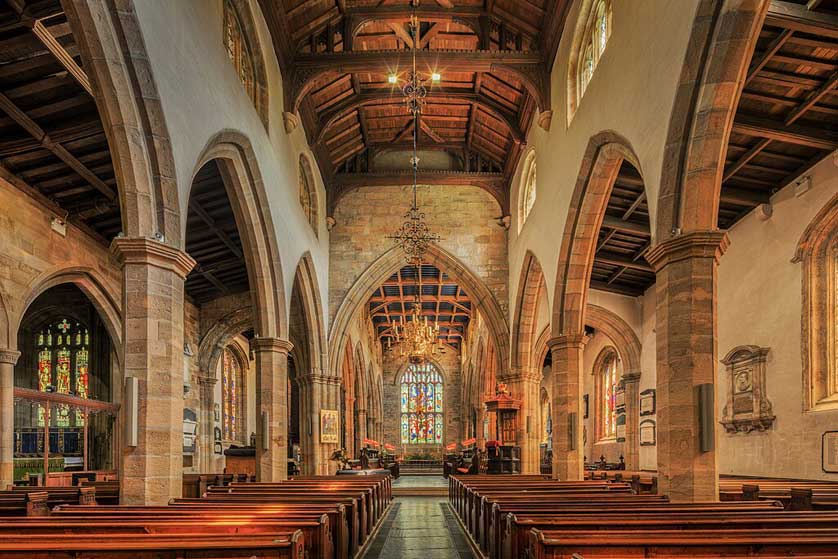
The interior of the church
Access – Getting There
Lancaster Castle, Castle Parade, Lancaster, LA1 1YJ, UK
Tel: 01524 64998
www: lancastercastle.com
The castle offers guided tours that delve into its rich history. Visitors can explore the medieval halls, prison cells, and courtrooms. Note that access to most of the castle interiors is by guided tour only.
The castle is only 300 meters from Lancaster Railway Station. The station is on the West Coast Mainline and offers regular services to London Euston in London, Carlisle and Preston. Additionally there are trains to Edinburgh Waverley, Glasgow Central, Liverpool Lime Street and Manchester Airport.
Lancaster has a wide selection of hotels and guest houses.
See a listing of hotels in Lancaster with Booking.com.
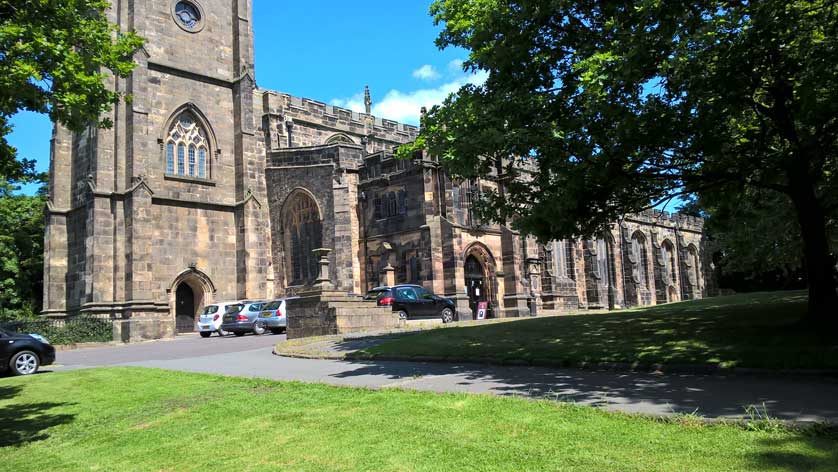
Lancaster Priory (the Priory Church of St Mary)
Book a Hotel in London - from 5 stars to budget options
Windsor Castle, Bath and Stonehenge Tours with Stonehenge Tickets from London
Westminster Abbey Tickets & Tours
Tickets For London Attractions - Tiqets.com
© BritainAllOver.com – Guide to the Best of Britain
